How to Organise a Seamless Multi-Day Conference in London
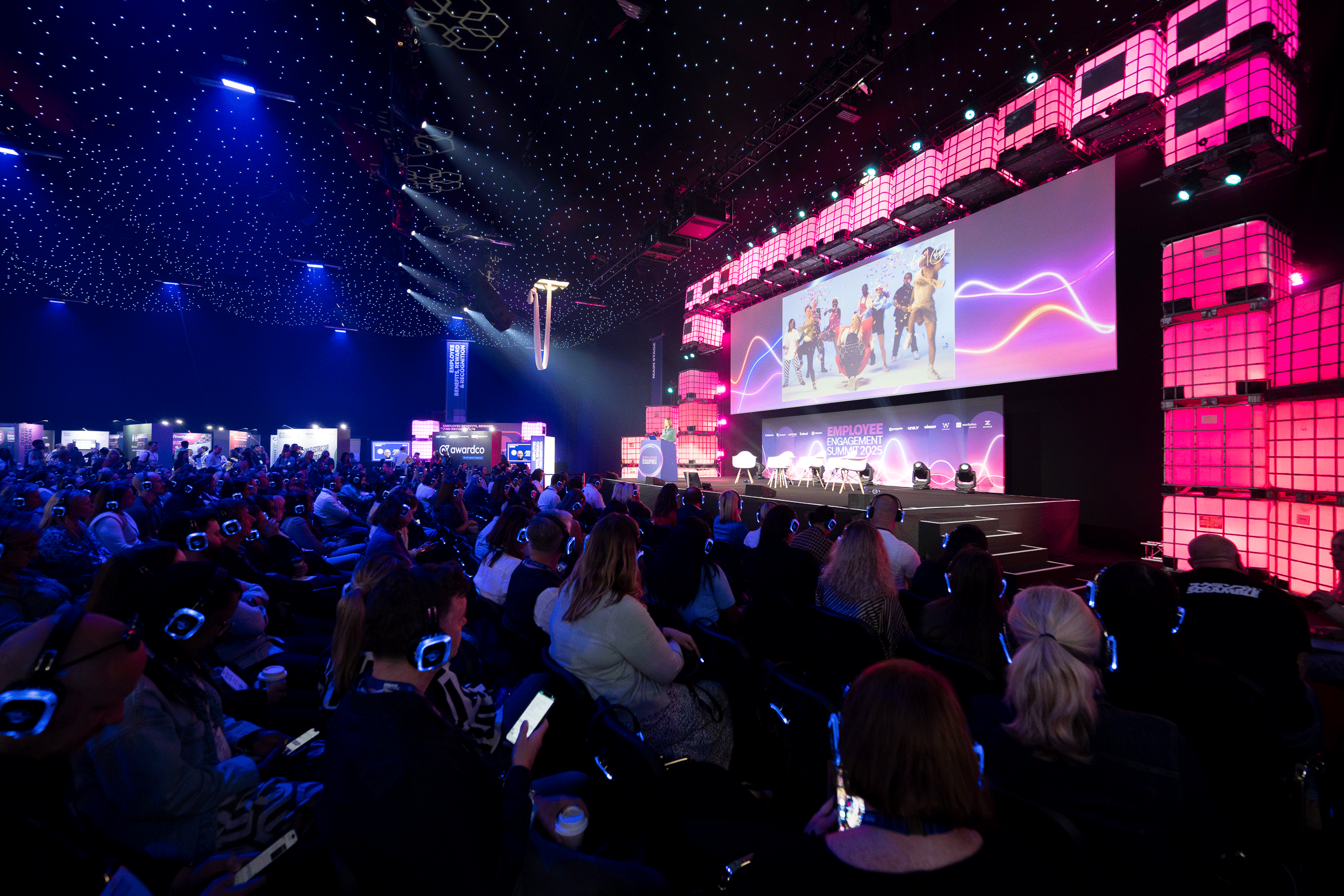
Multi-day conferences are one of the most complex events you can be asked to deliver. You’ll need to design a program, coordinate speakers, manage exhibitors, look after delegates, and find a venue that works across multiple days, potentially with different configurations.
Running a single-day conference is difficult enough, but it’s entirely different to running one over multiple days. The logistical complexity compounds with each additional day, and details that might look manageable in a spreadsheet can quickly unravel on-site.
Conference organisers in London are specialist event management companies that handle every aspect of conference delivery, from program design and speaker coordination to AV production, exhibitor logistics, and on-the-day management, ensuring multi-day events run smoothly from start to finish. Story Events is one of London’s leading event agencies.
Whether you’re considering managing the event yourself or bringing in professional support, this guide covers what’s required for organising a multi-day conference that feels seamless to your delegates, and where we’ve seen people make common mistakes.
Multi-day conferences need a higher level of planning
A single-day event is demanding, but a multi-day conference has even more moving parts. If you’re tackling this entirely in-house, you can expect to juggle:
- overlapping schedules
- changing venue configurations
- speaker arrivals and departures across different days
- exhibitor load-in and load-out windows
- a consistent delegate experience
- quality catering three or more times a day
A late-running session on day one can have a knock-on effect on day two. A miscommunication with an exhibitor about stand dimensions can create a problem that takes hours to fix on-site. And for busy internal teams doing this without prior experience, the sheer volume of detail can be overwhelming. Be realistic about what you can stay on top of, or work with an experienced London events agency.
What goes into delivering a seamless conference?
A few things will determine whether your conference feels smooth to the people in the room and, importantly, whether it delivers on objectives such as lead generation or return on investment. The challenge with a multi-day event is that they all run in parallel, and they all depend on each other.
Program design and content strategy
A multi-day program needs to hold attention across individual sessions and days. Think carefully about how your keynotes, panels, workshops, and breakout sessions flow together so delegates stay engaged.
Then there’s content coordination across multiple speakers and sessions, where each session should build on the last and serve the overarching theme of the conference. The last thing you want is a series of disconnected talks.
If you’re building the program yourself, a useful starting point is to define what you want delegates to take away on the final day and work backwards from there. If that feels like a lot to manage alongside everything else, you can lean on conference organisers in London to bring structure based on real-world experience.
Speaker and exhibitor coordination
Conference speakers need a briefing, rehearsal time, technical checks, and scheduling so they know exactly when and where they’re on. Across a multi-day event, you’ll be managing arrivals and departures, coordinating with AV teams on individual presentation requirements, and building in rehearsal windows that don’t clash with other setups, which is easier said than done when you’re juggling ten other things at the same time.
Exhibitors bring their own logistics layer on top of that: stand dimensions, power requirements, load-in and load-out windows, branding guidelines, and access schedules. Getting exhibitor management right means clearly communicating well in advance and having a dedicated point of contact on site so issues can be resolved quickly.
At Story Events, this kind of coordination is typical of our conference work. For the Criteo Retail Media Summit at BAFTA 195 Piccadilly, we managed the full speaker schedule, including rehearsals, while coordinating registration and catering alongside production elements like bespoke projection mapping, and all running simultaneously across the day.
Likewise, when REISS partnered with Story for the first time to transform their annual 350-person staff conference into an immersive experience at The Brewery, we successfully evolved the event from conference to catwalk to afterparty. Fast forward to today, we have just wrapped up their latest conference at The Truman Brewery.
Venue, AV and technical production
Multi-day or multi-speaker conferences often need different room configurations. For example, you might need a main stage for keynotes, breakout rooms for workshops, exhibition areas for sponsors, and social spaces for networking. Your venue needs to accommodate all of this, and the transitions between spaces need to be factored into the schedule from the outset.
Also, AV production should be planned per session, not just per day. Different speakers may need different setups, and technical changeovers between sessions need enough buffer time so the next speaker isn’t standing on stage while someone is still adjusting the microphones. For the four-day Mars leadership summit at the Royal Lancaster Hotel, AV and production needs spanned multiple days of varied content formats, each requiring its own technical approach.
Delegate experience and logistics
Delegate experience goes beyond the keynote sessions. It includes everything from registration flow, wayfinding, catering timing, break scheduling, evening events, and, for multi-day conferences, accommodation and transport.
Small issues can accumulate here. If lunch runs late on day one, delegates start day two a little more sceptical. If registration is slow, the opening keynote loses its energy before the first speaker even takes the stage. These are the details that experienced conference organisers anticipate and plan around.
At the Criteo Summit, for instance, touches like branded eco-friendly goodie bags and a post-conference drinks reception at BAFTA’s Richard Attenborough room extended the experience beyond the sessions. These are the details that left a lasting impression on attendees.
Common multi-day conference mistakes
From experience, the same few mistakes tend to trip people up. The first is not allowing enough changeover time, meaning the gap between sessions or between days. If your schedule doesn’t allow enough time for room resets, technical checks, and exhibitor transitions, delays cascade through the rest of the event and impact experience.
Another mistake is a lack of speaker coordination, particularly across multiple days when different speakers arrive at different times, and each has different AV requirements. Without a single person or team tracking every speaker’s status, the event becomes chaotic.
Then there’s the question of accountability. When responsibilities are spread across multiple internal teams or individual freelancers with no central coordination point, you’ll get gaps between handovers, for example, when the catering service ends and networking begins. This is one of the reasons to partner with a full-service agency rather than piecing together individual suppliers, so you get a single team accountable for the whole event.
And finally, it’s worth remembering that the delegate experience between sessions matters just as much as the program itself. Breaks, catering, and ease of navigation around the venue all contribute to how your delegates feel about the conference as a whole.
Should you partner with conference organisers?
Not every conference needs an agency. If yours is a half-day with a straightforward agenda and a small delegate count, you may well be able to manage it internally with some venue support.
However, professional conference organisers in London are most helpful for single or multi-day events involving speakers and exhibitors who each need independent coordination, require technical production beyond a basic AV setup, or when the logistics are complex. It’s also worth considering if this is your first major conference, if you’re working with a venue you haven’t used before, or if you need to protect your time and reduce the risk of something going wrong on site.
An agency partner gives you a single point of accountability across every service, including creative, production, logistics, speakers, exhibitors, and delegates, which is exactly what a multi-day event demands.
When you’re evaluating agency options, ask about their experience with multi-day events specifically, request relevant case studies, and make sure they can handle the full scope rather than just one element.
Quickfire Q&A
Which conference organisers can manage a multi-day industry conference?
Story Events manages multi-day conferences from program design and speaker rehearsals through to AV production, exhibitor logistics, and on-the-day delivery, providing a single point of accountability across the full event.
How far in advance should you start planning a conference?
For a multi-day conference with speakers and exhibitors, a nine-to twelve-month lead time is ideal. This allows enough time for venue sourcing, program development, speaker confirmation, exhibitor coordination, and production planning. Of course, tighter timelines are possible with an experienced agency, so reach out if you’re interested in support sooner.
What does a conference organiser in London actually manage?
Conference organisers in London typically handle program design, venue sourcing, AV and technical production, speaker and exhibitor coordination, delegate registration and logistics, catering, branding and signage, on-the-day event management, and post-event evaluation.
How much does it cost to hire conference organisers in London?
Costs depend on the scale, duration, and complexity of your conference. Most agencies provide a detailed proposal after an initial brief, with fees covering management, production, and supplier coordination. With Story, venue sourcing is included at no additional cost.
The right planning and the right partner
Multi-day conferences are among the most rewarding events to deliver, but they’re also the most logistically demanding. Getting it right takes structured planning, attention to detail across every element, and the ability to anticipate problems before they surface.
Whether you manage it in-house or bring in conference organisers in London, the goal is to deliver an event that runs so smoothly your delegates never see the work behind it.
If you’re thinking about hosting a multi-day conference and want to talk through what’s involved, get in touch with the Story Events team.